 Wild Earth
Search this topic’s guides
Choose an example below or describe one specific item, task, or problem. Results come from the guides already on this page.
What can I grow here?
Use a local planting calendar for vegetables and herbs. Jump to the USDA zone lookup.
Windowsill
Start with the brightest window you have and check how long direct light reaches it. Try scallion regrowth as a small first project.
Regrow scallionsBalcony or patio
Note the hours of sun and how exposed the space is to wind. Choose a container with drainage and a crop suited to the amount of light.
Choose a containerYard
Observe where sun falls during the day. Pick one small bed, then compare its conditions and your local frost dates with your seed packet.
Troubleshoot growing conditionsPhoenix area · Maricopa County planting calendar
Plant now
Check the current month in the county calendar for crops and whether to sow seeds or set out transplants.
Prepare for next month
Use the calendar to choose your next crops and check the time to harvest.
What to watch for
Check your local forecast for heat and frost. Balcony pots and exposed beds can experience different conditions from the rest of your neighborhood.
University of Arizona Cooperative Extension planting calendarRegrow scallions on your windowsill
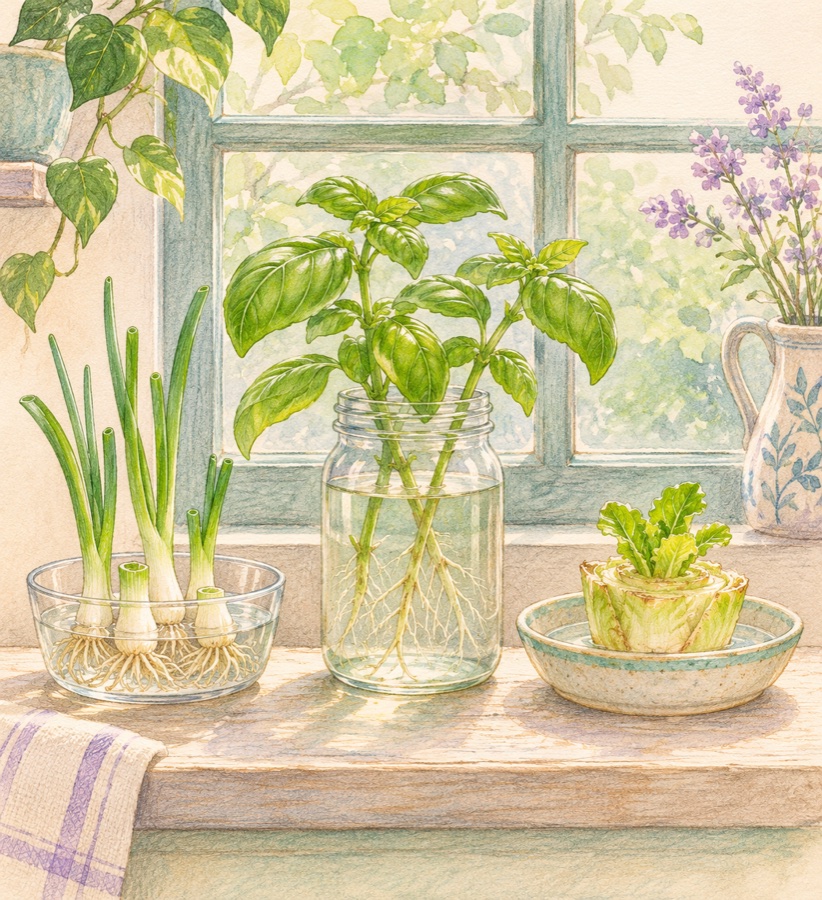
Save the root ends from dinner and try a windowsill experiment. Start with scallions if you want something you can snip into your next meal.
- What you need
- Scallion root ends, a clean glass, water, and a bright window.
- What to do first
- Save the bottom inch or two with the roots attached. Stand them upright and add just enough water to cover the roots. Refresh it daily.
- How to tell it’s working
- Look for fresh green growth from the center. Snip some when it’s long enough to use.
Turn one basil bunch into two plants
Choose a healthy stem. Cut just below a leaf joint and strip off the lower leaves. Put the bare stem in water with the upper leaves above it. Refresh the water and move the cutting into a small pot with drainage once roots develop.
Make a lettuce heart sprout again
Set the base of a romaine head in a shallow dish with a little water and put it in a bright spot. Change the water daily. Watch for new leaves in the center. Expect a few small leaves for a sandwich or garnish.
See what actually grows from a carrot top
Set the crown in a shallow dish, cut side down, and refresh the water daily. Watch the ferny leaves grow from the center. The crown produces greens. Growing another carrot root starts with a seed.
Use clean containers and fresh scraps. Discard anything that turns slimy or moldy.
Start indoors
Grow a salad in stages
Sow a short row each week in separate shallow containers. Mark each with the sowing date. Harvest a few outer leaves from the oldest pot while the next batch fills in. This spreads the harvest and makes it easy to see which sowing conditions worked.
Figure out whether your window is bright enough
Watch where direct sun actually lands in the morning, midday, and afternoon. If seedlings lean or stretch, move them into stronger light or use a grow light at the distance its maker recommends. Compare the spacing between new leaves after the change.
Harvest basil so it branches
Once a stem has several pairs of leaves, snip just above a healthy pair. Leave foliage below the cut and watch for two shoots to grow from that spot. Harvest from different stems so the plant has time to recover.
Grow more in a small space
Choose a pot by what you want to eat
Start with a crop you buy often. Try a broad container for salad greens, a deep roomy pot for a compact tomato, or a pot with a trellis for peas. Check the variety’s mature size before shopping.
Make one container work through two seasons
Start with quick greens or radishes during cool weather. After harvesting, refresh the mix and switch to bush beans when local conditions warm up. Check your local planting calendar before swapping crops.
Keep a patio tomato evenly watered
Check the mix below the surface and notice how heavy the pot feels after watering. Compare it the next day. As the plant grows and the weather warms, check it more often. Water thoroughly when needed and let the excess drain.
Find your USDA growing zone
Enter your ZIP code in the USDA map’s Quick Zip Code Search, then select your result here for growing tips.
Hardiness zones describe winter cold for perennial plants. Use local frost dates, seasonal heat, and your seed packet to time annual vegetables.
Small changes that solve common problems
Leaves reach toward the window
Move the planter closer to strong light or add a grow light. Rotate the pot to keep growth more even.
The pot stays wet for days
Check that water can leave through the holes, empty the saucer, and let the surface dry as appropriate for the crop. Use potting mix throughout the container.
Lettuce suddenly shoots up
A tall flowering stem is a cue to harvest and start another batch in a cooler spot or season.
You water every pot the same way
Group plants by thirst. Basil and lettuce prefer more even moisture, while rosemary and thyme can dry more between waterings.
University of Vermont indoor growing guide · University of Maryland container growing guide